
Upsize the Net: How to Catch Huge Trout on Salmonflies
Words by Greg Thomas
Of all the annual western fly hatches, nothing gets anglers more excited than salmonflies.
When someone shouts, “Salmonflies are coming off” a call reverberates, from Livingston to Bozeman, over west to Missoula, Washington and Oregon, and on down the pike to Wyoming, Idaho, Utah, and Colorado.
No matter where you find them, the salmonfly’s appearance sends trout towns into a frenzy and loads up our rivers with boats, rafts and big expectations. Not that there’s anything wrong with that. In fact, you can’t blame people for their enthusiasm—it’s a chance take a truly large trout on a dry fly. When the flies come off and the fish look up, it’s not uncommon to catch dozens of trout a day, and miss just as many, all eagerly rising to a big, highly visible dry fly.
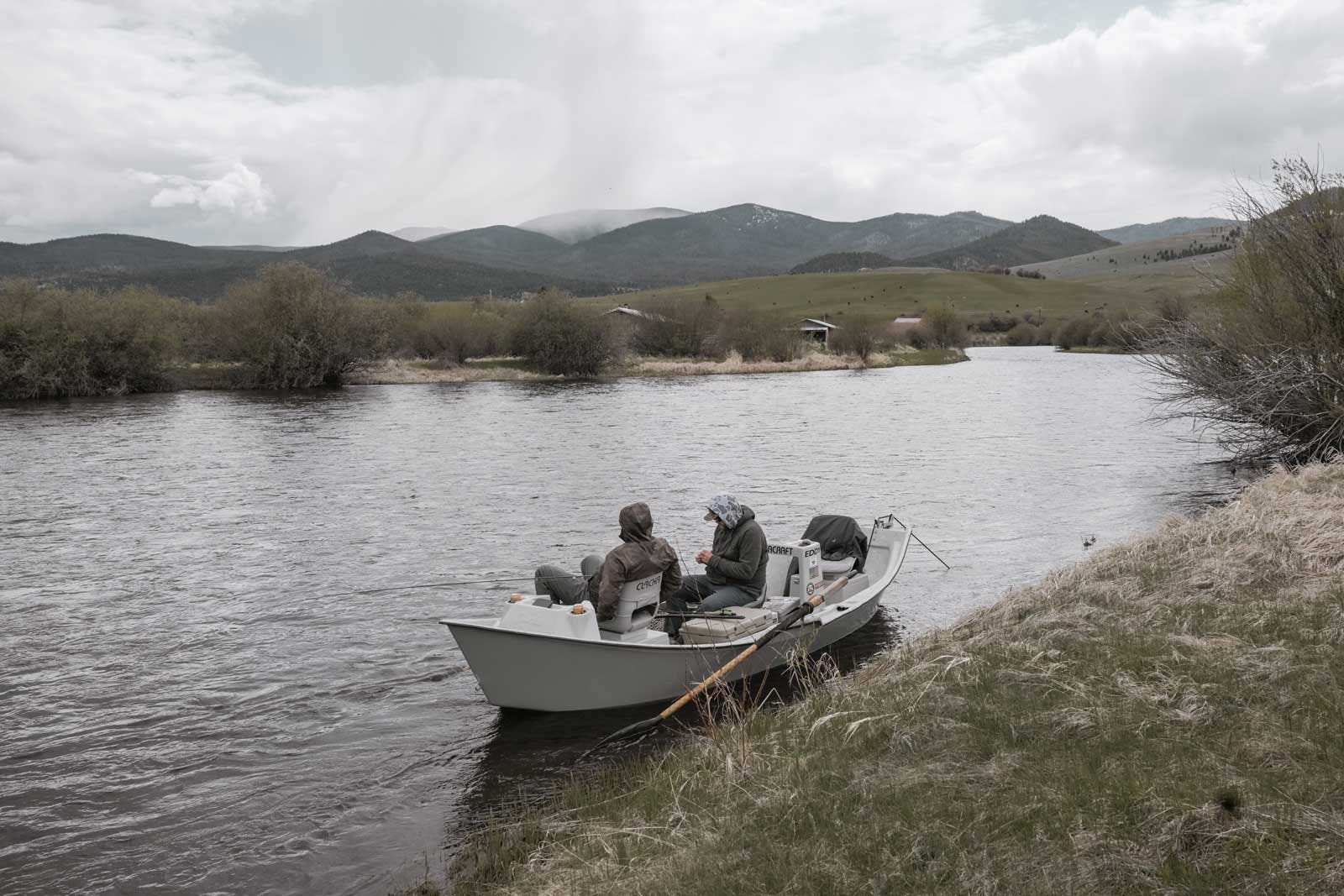
It’s no secret that large trout, in any given river, are rarely seen. They live solitary lives in those snaggy, unreachable logjams, or tucked deep under those cut-banks. They are creatures of the night and hunt rodents, frogs, fish and snakes. These big fish—meaning trout ranging between four and 10 pounds (sometimes more)—do not feed on our common offerings, which include minuscule midge, caddis and mayfly imitations. Not worth the effort. That means most anglers won’t even see a giant fish, let alone promote it to eat such a tiny bug. Oh, those brutes might leave their safe places to peak at a green drake or a hopper. But nothing provides a better shot at a picture-fish, feeding mid-day, than a salmonfly.
You don’t have to fish salmonflies to catch big trout in the Rockies. You can concentrate on stillwaters where the average size is much larger than you’d find on moving water. Case in point, several years ago my 10-year old daughter joined a friend on a nondescript lake. They tooled around in the driftboat and showed up an hour or so later. I saw my friend walking to the campsite and said, “Did you guys get any?” He replied, “Tate got one.” I didn’t think much of it until Tate peddled by with a wide grin and 12-pound brown tied to the handlebars.
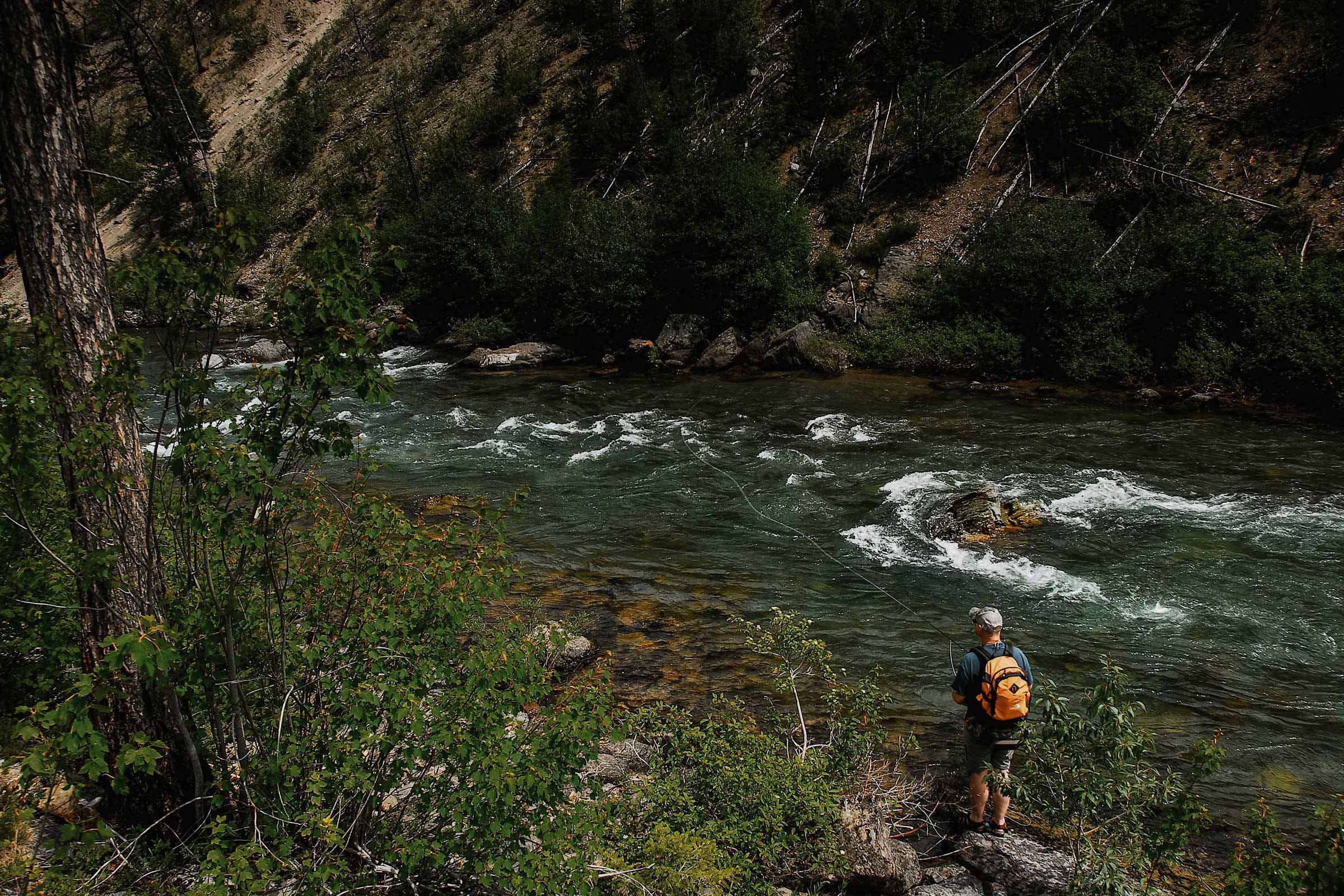
To target big trout you can also fish around inlet streams that feed those lakes and reservoirs. During spawning season, big trout concentrate at the mouths of these streams, waiting for the right conditions to head up and spawn. It’s kind of like fishing in a barrel, but the photos don’t lie.
You can also prowl in the dark, a unique experience, but not my favorite. I’ve done it enough to know—during the brown drake hatch on Silver Creek; on opening day at the Hog Hole; during caddis blitzes on the Missouri; listening to smolt busts on Pass Lake . . . . In my experience, “night fishing” is only sort of fun. I’ve never had the best luck. I always feel unbalanced. And I always wonder which cast will stick that size two streamer in an eye. Also, after dark you can’t see the eat, a surface-level visual that’s a big part of the salmonfly experience. Plus this: I don’t do well without sleep. I go into the night with big goals that quickly diminish when the fish don’t play and my eyelids droop.
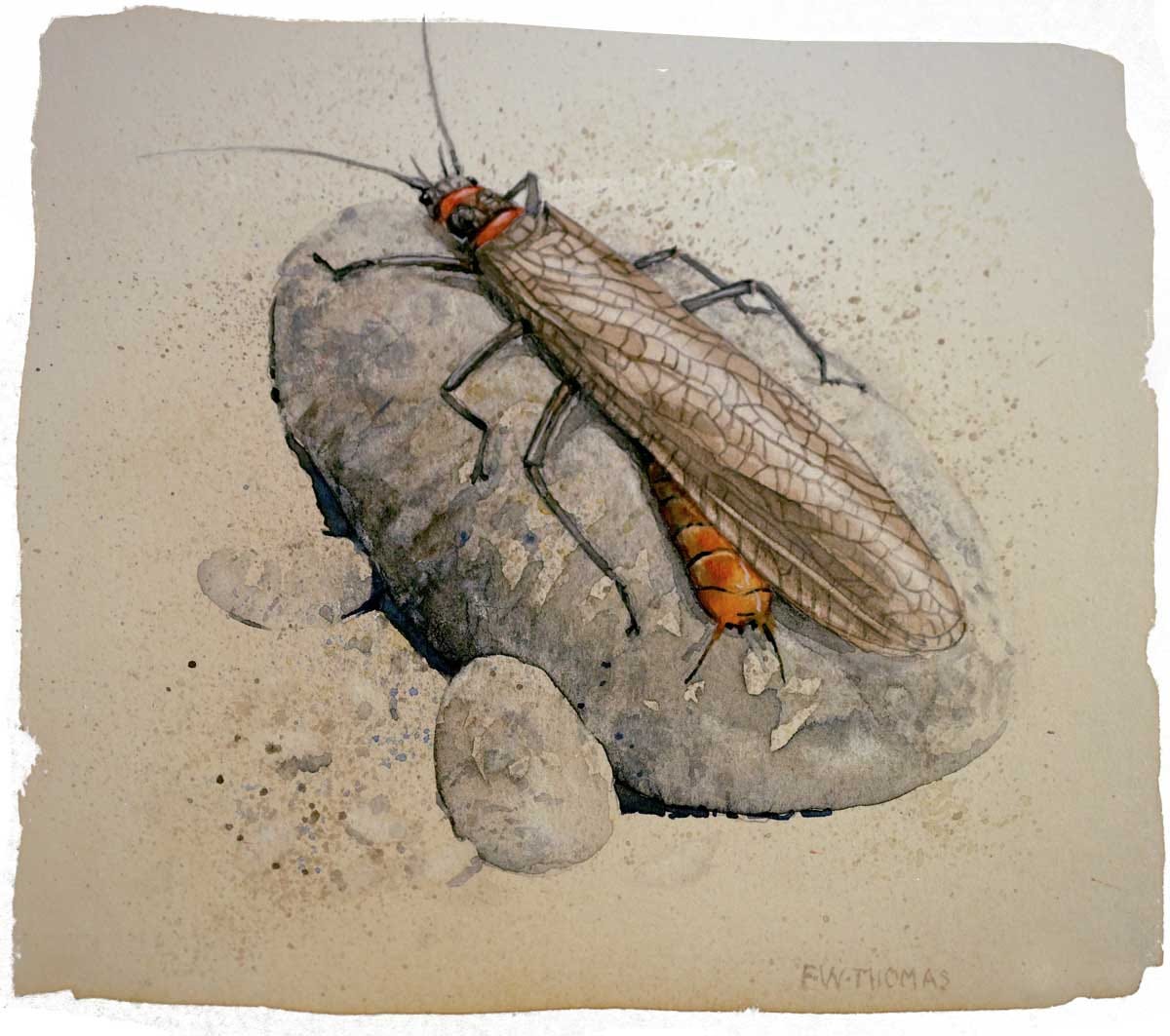
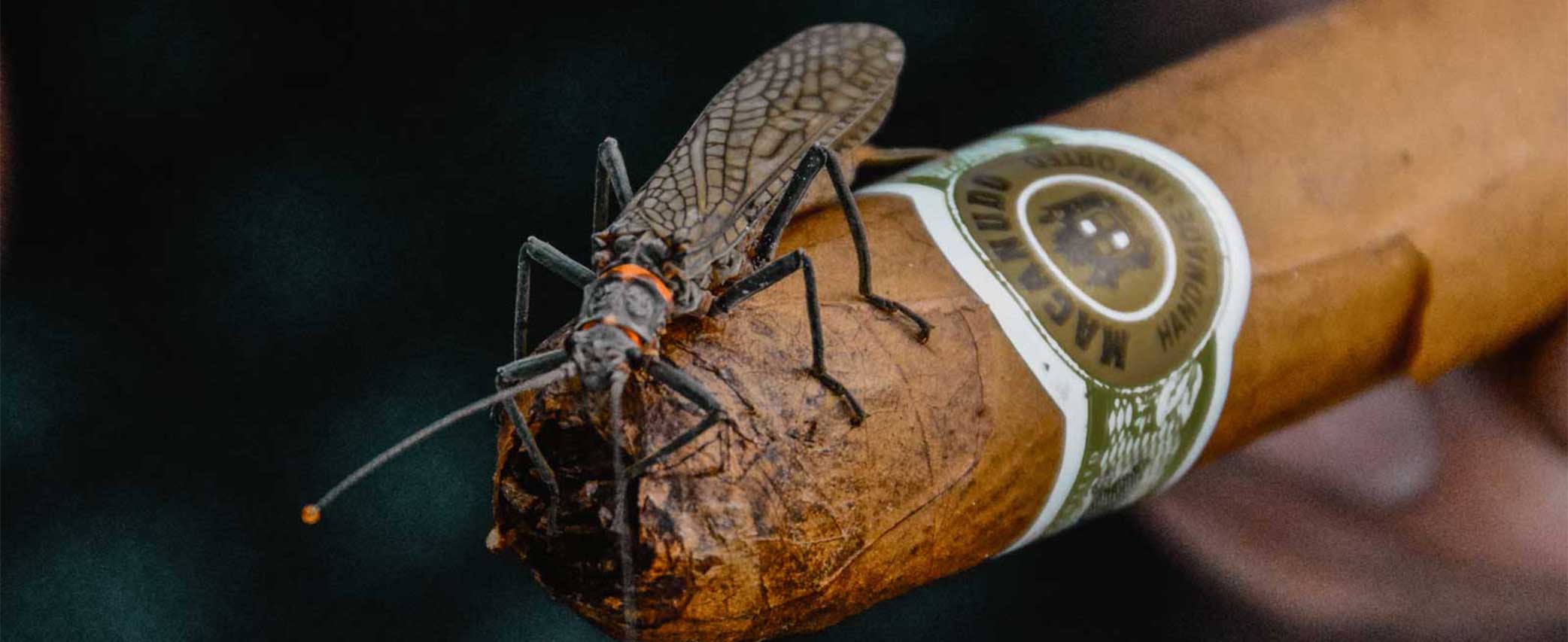
There’s good reason for large trout to cast aside caution during a salmonfly hatch. Salmonflies measure about two-and-a half inches long, possibly three inches (I don’t have a ruler nor a salmonfly at hand), and I’ve heard these bugs provide more than half of a trout’s annual protein intake . . . all in a short two-week long, late-spring and early summer window.
Salmonflies begin hatching in May and their presence, depending on the river, could stretch into late July. On most waters the hatch peaks during the last two weeks of June and/or the first two weeks of July.
There are several worthwhile tactics to employ during salmonfly time. One is to take your chances fishing in the midst of the hatch. Only problem? Those fish may have already gorged on salmonfly nymphs, and now are equally plugged with adults, back-to-back all you can eats. They may not want another bite for several days. If you fish behind the hatch, up to five or 10 miles downstream, you may find fish that have regained their appetites and are once again looking up for dries. You can also fish ahead of the main hatch—you won’t see many, if any, bugs on the water or in the air, but salmonfly nymphs should be marching towards shore with trout taking notice. They’ll have full appetites, having waited a year for this event. Dangle a simple pattern, such as a Bitch Creek Nymph, Pat’s Rubberlegs, or Girdle Bug, below a bobber. It could be lights out all day. You won’t see the eat, but you might get big numbers and possibly bragging rights for the year.
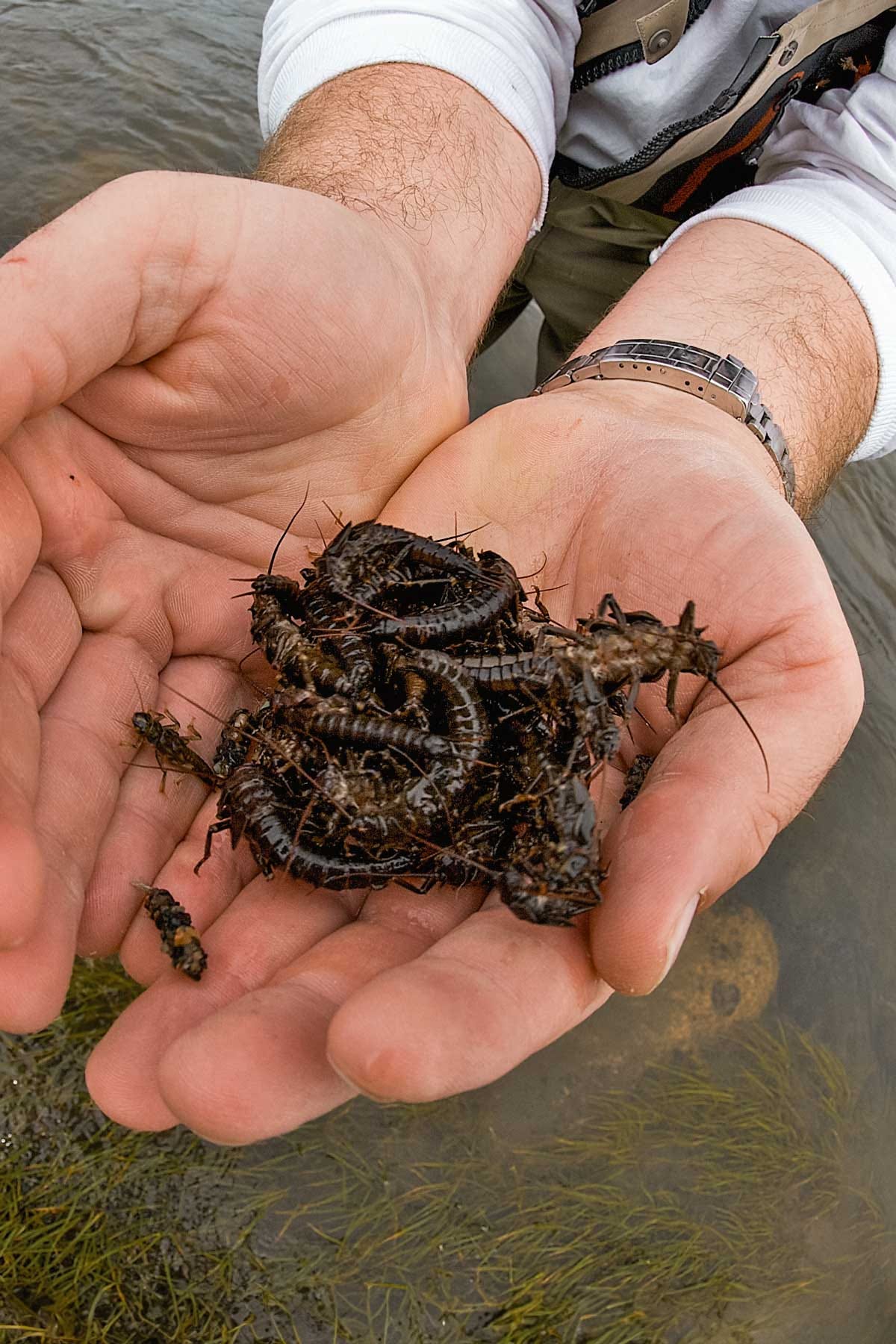
While the salmonfly hatch provides an interesting scene, it’s not a slam dunk for giant trout or, for that matter, any trout. There are days when conditions are prime and the fish won’t eat a bug to save their lives. Other times, water conditions may complicate things, with high, roily flows preventing anglers from wading in and/or launching a boat. Chase this hatch with conviction, but don’t be surprised if expectations get thrown in the trash.
However, keep your chin up. If you follow the hatch and fish it each year, you will end up with some of the greatest memories of your fishing career. Spring in the Rockies is beautiful, with grassy green hills accentuated by molar-white mountaintops.
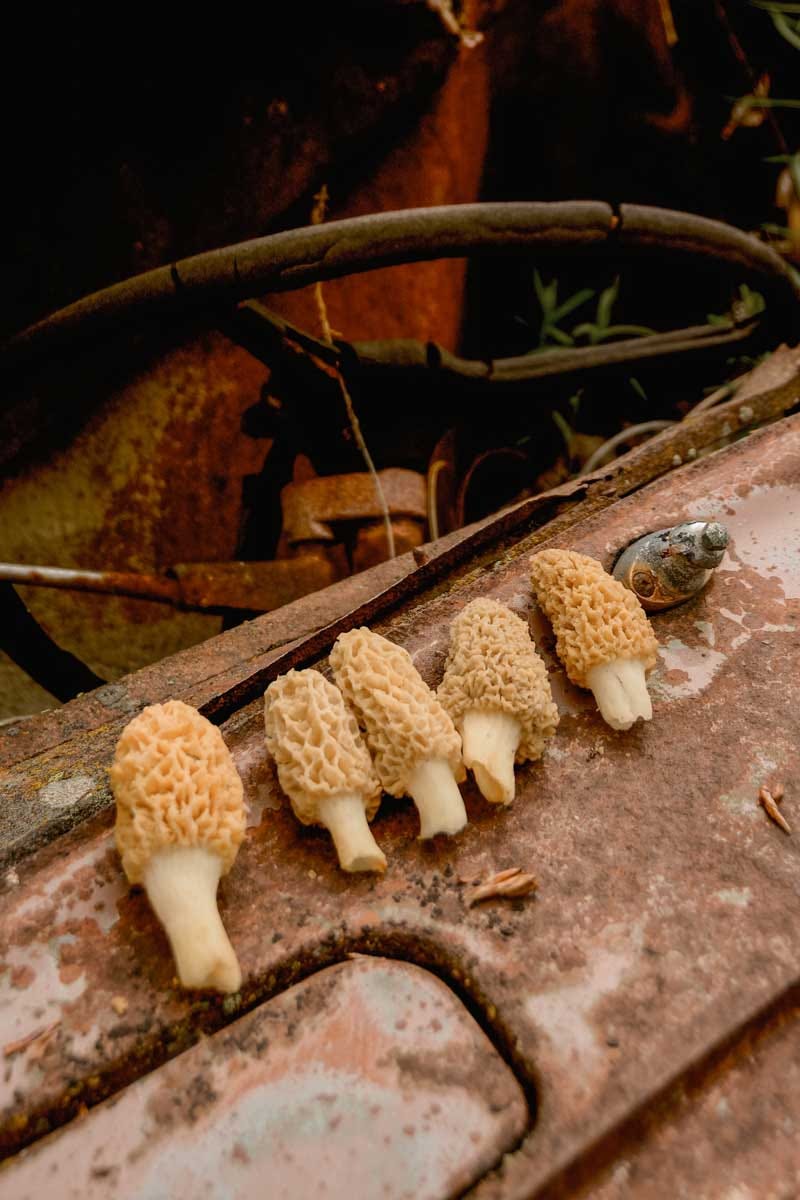
Temperatures range into the 70’s and 80’s with soft, gentle breezes rippling through the cottonwoods. You’ll see young of the year elk, deer, pronghorn antelope and, maybe, a moose calf. Redwing blackbirds and yellow-headed blackbirds pick at bugs and call from the banks. Avocets sometimes flash by. Morel mushrooms sprout from fallen logs, a simple delicacy to spy when venturing away from the boat.
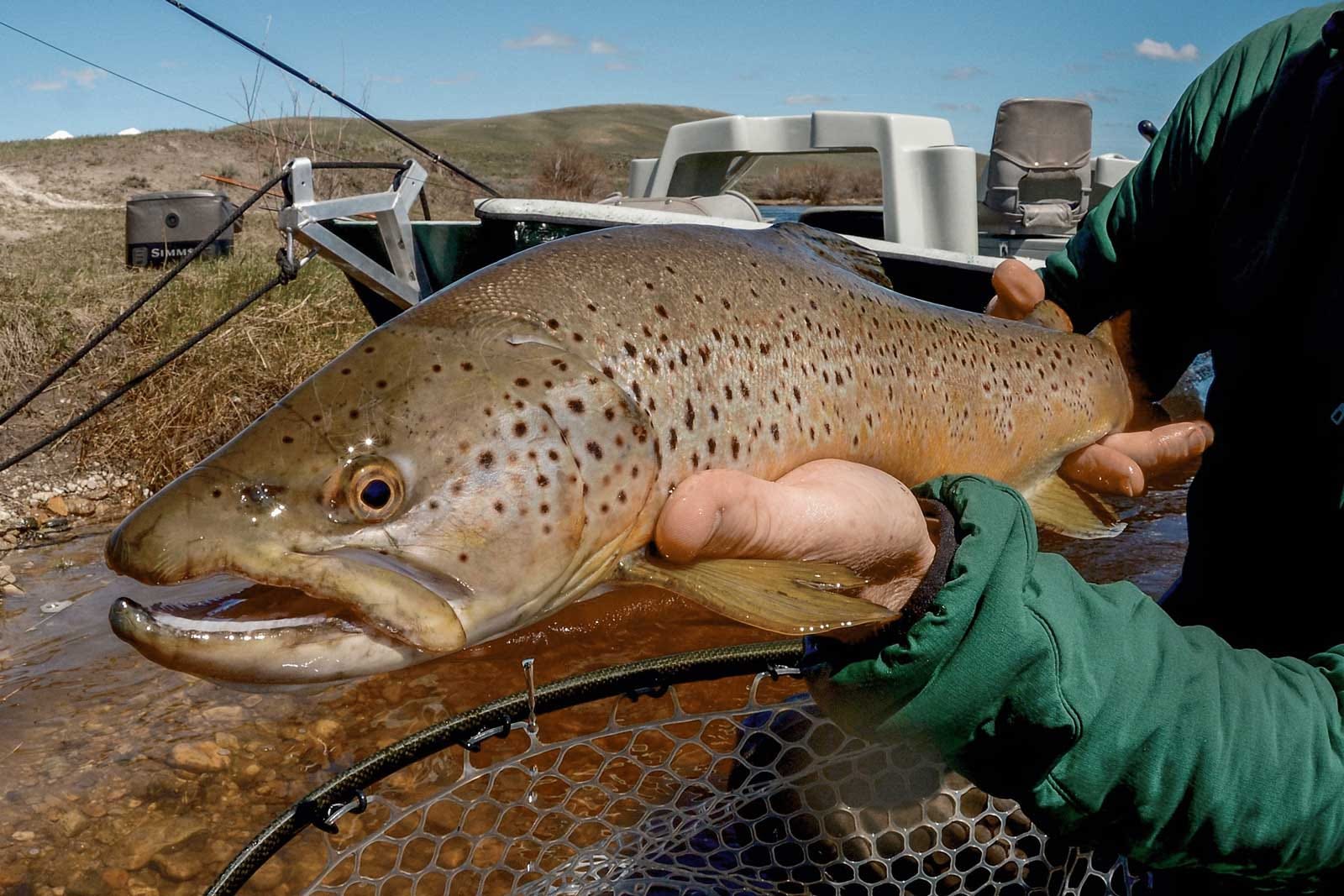
It all adds up to a beautiful and rewarding experience, whether you catch a slab or not. But, each year, new stories feed you toward the next; a mouth the size of a garbage can parting the water and missing a fly; the big rainbow—26 or 27 inches long—that slipped off the net, breaking the tippet in the process; that two-foot long brown in the canyon with nowhere to beach the boat and net the beast; a jammer on the Girdle Bug that never budged from the bottom (i.e. originally thought to be a rock, then broken off without being seen—the worst!).
There are those stories and also victory dances. I’ll never forget rounding the last bend of the day, with a pile of guides and clients watching from the takeout. A friend was locked up on a Big Hole brown. Flows were super fast. Boulders galore. Half-submerged willows mid-river. Nip and tuck. When I finally took a swing with the net, and came up with a 26-inch long brown in the bag, a cheer went up from the crowd. We shot photos, released the fish, and beached the boat.
Overall, it was a slow day for all. A guide said, “Way to make us look bad.” I lifted my palms in mock disbelief and replied, “What, you haven’t been getting those all day?”
His clients looked at each other, glanced at the guide, pointed at us and said, “Tomorrow we fish with them.” That’s salmonfly time in the West. Lots of misses. A few big wins. Always a spectacle with a good story to tell.
FIVE MUST-HAVE SALMONFLY PATTERNS
WATER WALKER
Our #1 recommendation for a salmonfly pattern. Originally tied by Will Dornan, the Water Walker has a realistic profile while the foam body and wing ensure it floats like a cork. Well-placed rubber legs make this fly come alive in the water.
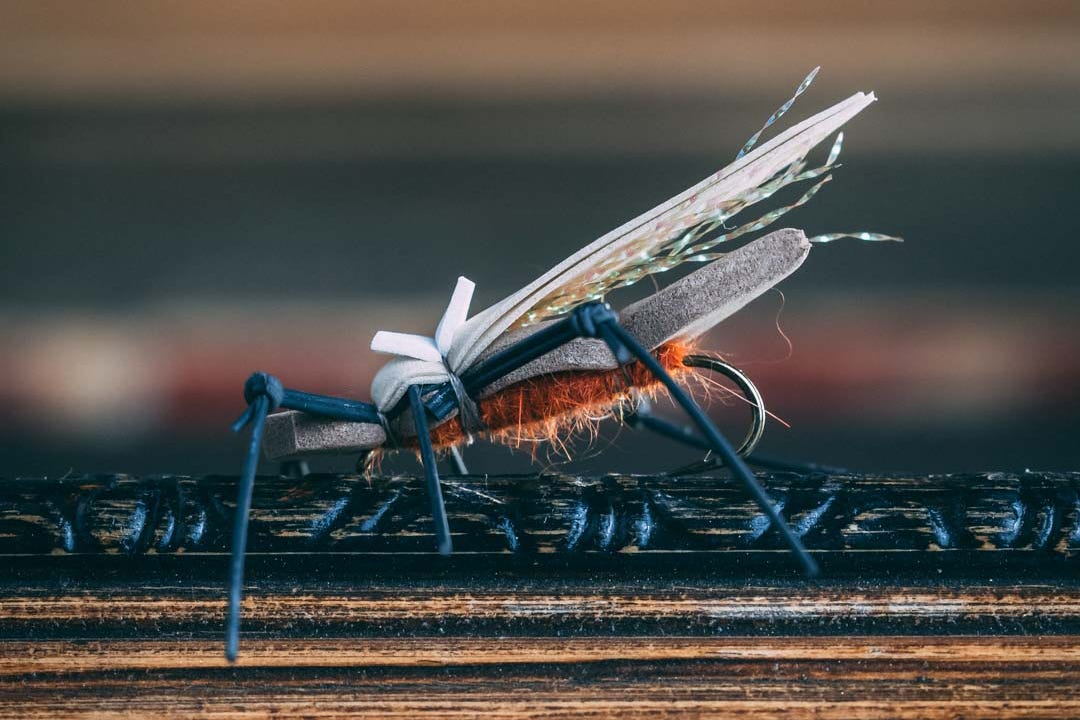
AJ'S ROLLING STONE SALMONFLY
This pattern features a bullet-head paired with a foam body and realistic segmentation. The synthetic wings shed water with every cast and rubber legs provide a realistic look to the trout lurking below.
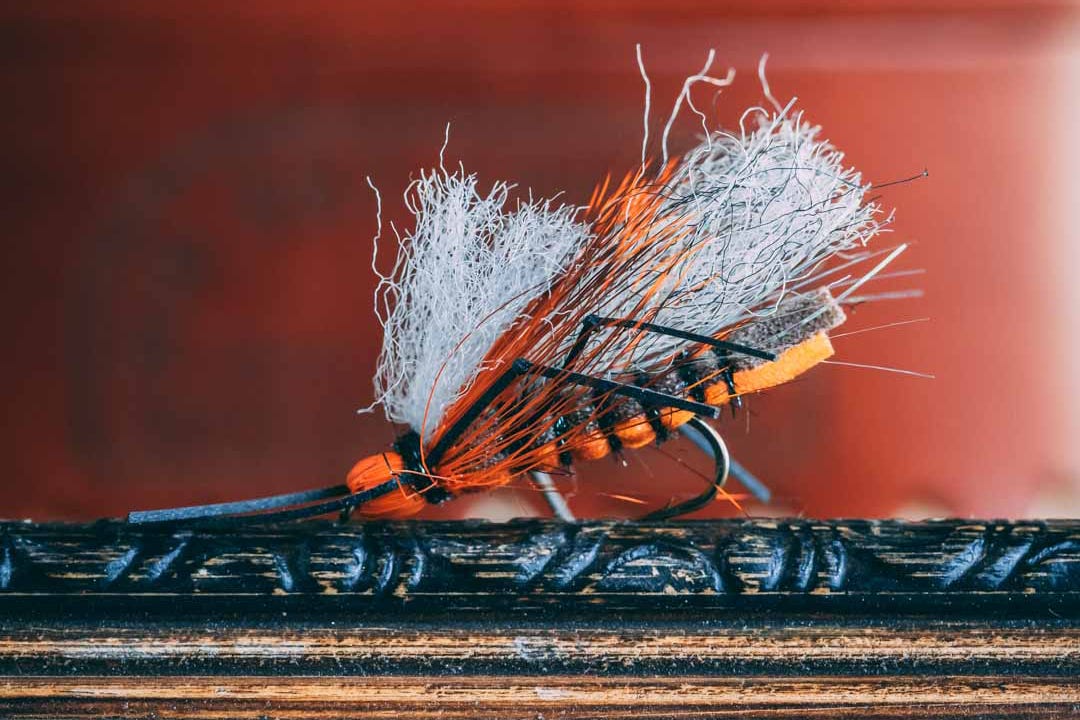
64 IMPALA SALMONFLY
The 64 Impala is a unique salmonfly pattern, featuring a low-profile wing, bright orange barred rubber legs shooting out in every direction, and a foam segmented body. This would be a great fly when the water has a little color from runoff conditions.
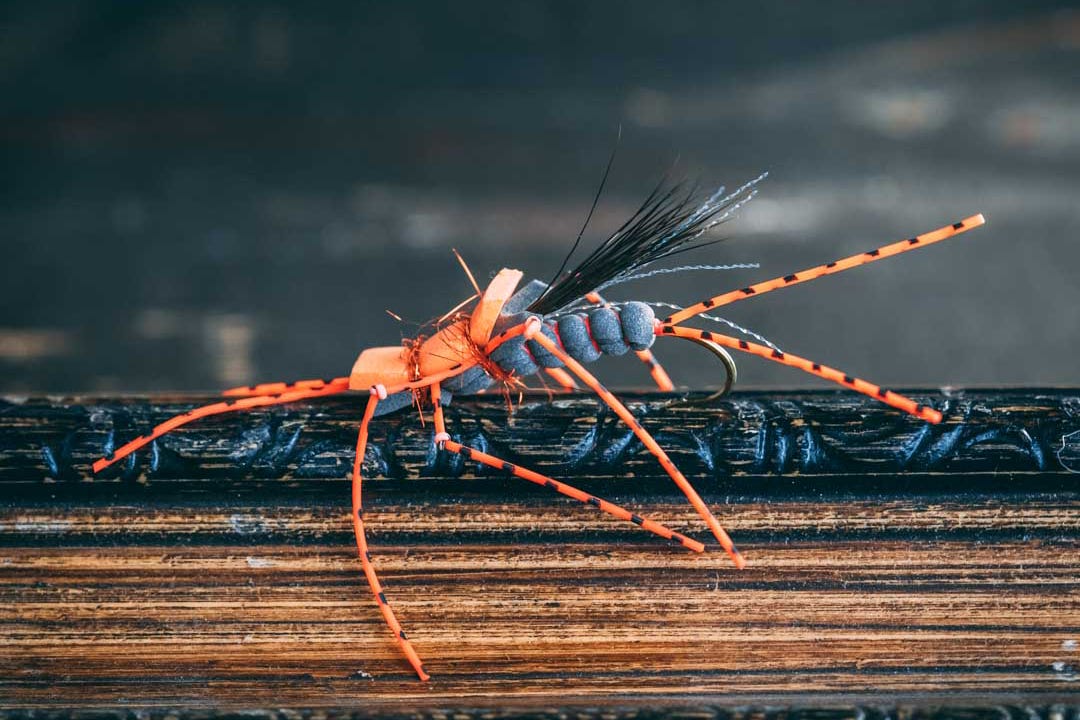
CROSSBRED STONE SALMONFLY
This salmonfly pattern has a two tone black and orange body. The black foam features a racing stripe of orange from head to tail and sits on top of a segmented dubbing base. Black barred orange rubberlegs are paired with straight black rubberlegs for visibility in a variety of water conditions. The double foam and elk hair wing provides optimal floatation.
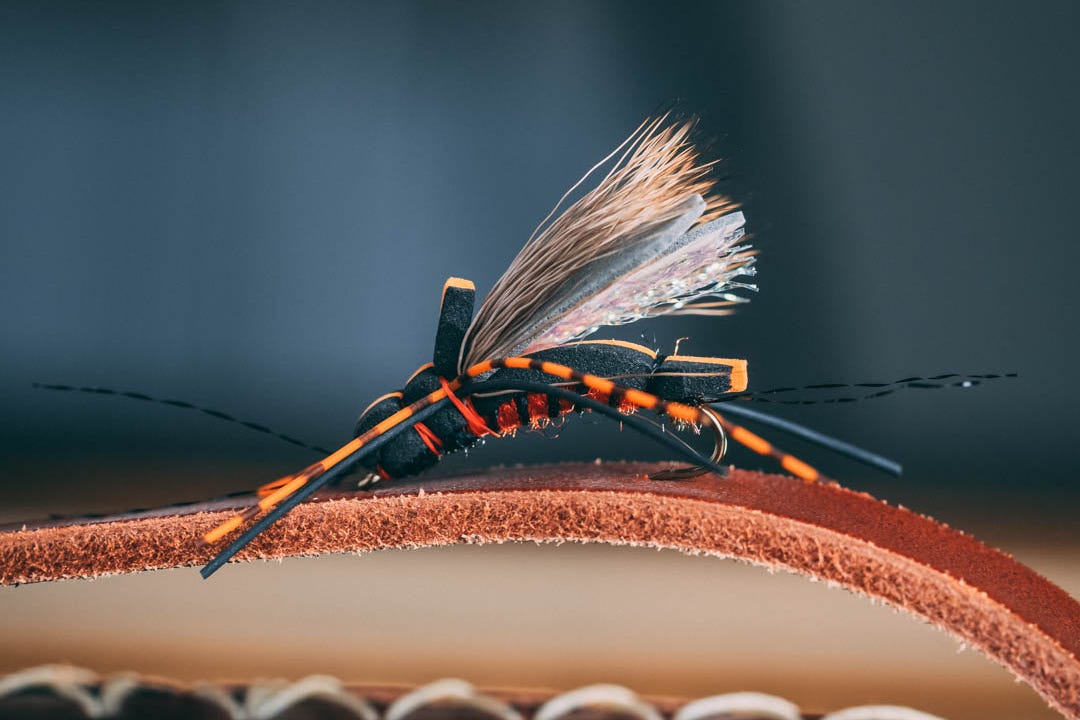
FLUTTERING STONE SALMONFLY
One of the most realistic adult salmonfly patterns we carry, the Fluttering Stone Salmonfly features a patterned and segmented foam body with black barred brown rubberlegs and a mid-profile wing with flash to imitate moving wings as the light hits it. The high-vis spot on the wing helps the angler see at distance or in runoff conditions.
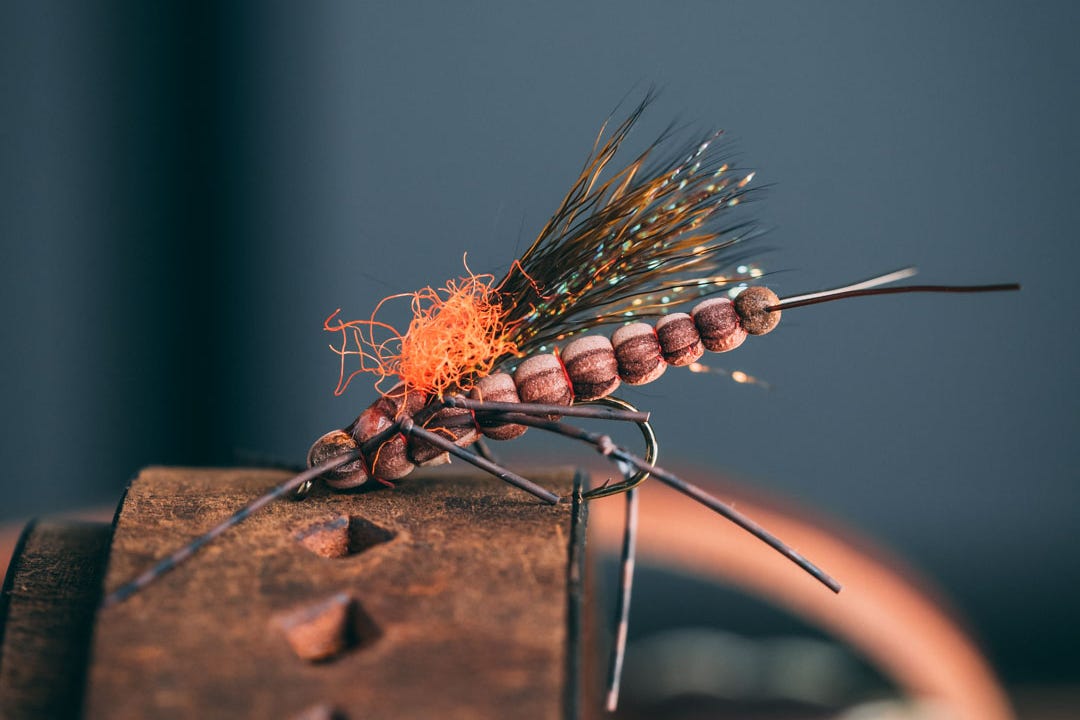

Find more salmonfly and stonefly patterns within our dry fly collection. We're always adding new patterns, so come back and check them out before the next big stonefly hatch.