
Montana's Missouri River: 2026 Fly-Fishing Forecast
Words by Sam Wike
State of the River
This February I attended an event in Great Falls, Montana, called State Of The Rivers. It’s hosted each year by the Missouri River Fly Fishers, which is the local Trout Unlimited Chapter for Great Falls and the surrounding area. The event focuses on central Montana’s bevy of trout fisheries, with a keen eye on the region’s centerpiece: the Missouri River. Information on the Missouri is provided by Montana Department of Fish, Wildlife and Parks’ fisheries manager Jason Mullen and Region 4 FWP fish biologist Adam Geik.
Bad News First
Water flows in the Missouri watershed are well below average. For anyone who has fished the river over the past few years, this is kind of obvious. The data set shared by FWP goes back to 1946 and demonstrates ups and downs of water in the river. However, not too long ago, in 2018, the Missouri received a significant spike in flows, which resulted in very healthy results. According to Geik, that high water year was fortuitous; survival rates for young fish increased and that contributed to the excellent fishing we are experiencing today. In fact, two years ago fish counts on the Missouri came in at an all-time high.
Unfortunately, the Missouri experienced low flows over the past two years and that decreased habitat for trout and aquatic insects. As a result, FWP has documented lower fish counts on the Missouri compared to 3 years ago, especially in the popular Holter Dam to Craig stretch. Despite that news, don’t fret: Geik said the Missouri responds extraordinarily well to high water/high habitat water years and that trout populations can rebound quickly when conditions are advantageous. The takeaway: Want more fish? Just add water.
The Good News
Notably, Geik said fish counts are an estimation, not an exact science, and that a lot of variability may occur in FWP’s annual counts. Water levels, the path of a research boat, the timing of the work, human error, which person is doing the netting, the depth of the fish being netted . . . all play a role in the data. The goal with a fish count is to get a recorded set of data points and discover overall trends over many years. It’s not about getting a population estimate that accounts for every fish in the river.
This is clear: fish counts in the “dam to Craig” section are trending down, but the Missouri may still offer the highest fish counts per mile in the state, with only the Bighorn River as a rival. Guides on the Missouri experienced some amazing days throughout 2025 and the start of 2026 and that should translate to good fishing for common anglers throughout 2026 and beyond.
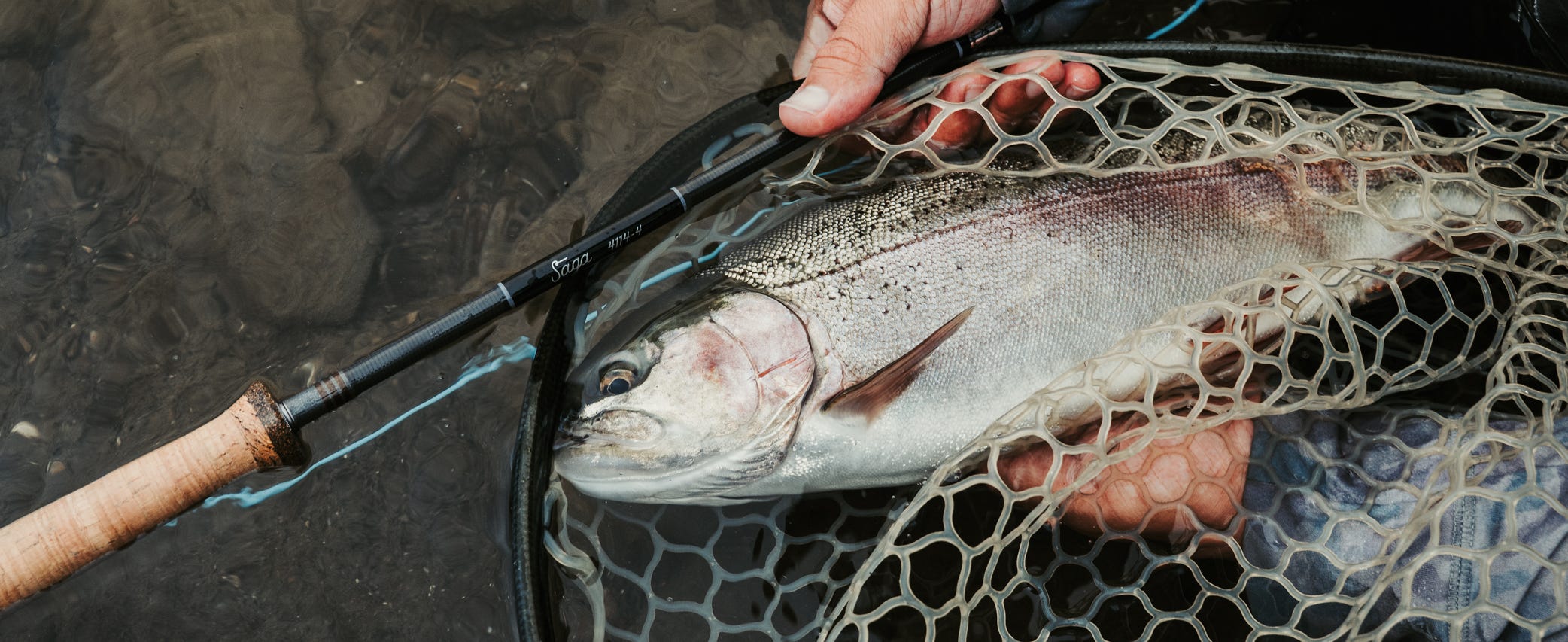
Overall, fish counts have trended up significantly since 1982 and the average size of those trout is also larger than recorded back in the 1980s and 1990s. Today, the average rainbow trout measures 18-19 inches with the next two most common sizes being 17 inches and 20 inches. The average in the 1980s and 1990s was about 16 inches.
I found that to be interesting because I often think, The river is not what it used to be. However, after seeing the new data, I now think, It’s amazing I get to fish a river that’s become better than it was 20-30 years ago, at least as it pertains to fish quality.
Are there more people on the water? Yes.
Are the fish just as easy to catch as they were back in the day? Maybe not.
Are the pods of rising fish as numerous as they were 10 to 20 years ago? Hard to say, because I just remember the good days. But, in the evenings, I’ve had some epic fishing and encountered numerous pods of fish feeding heavily.
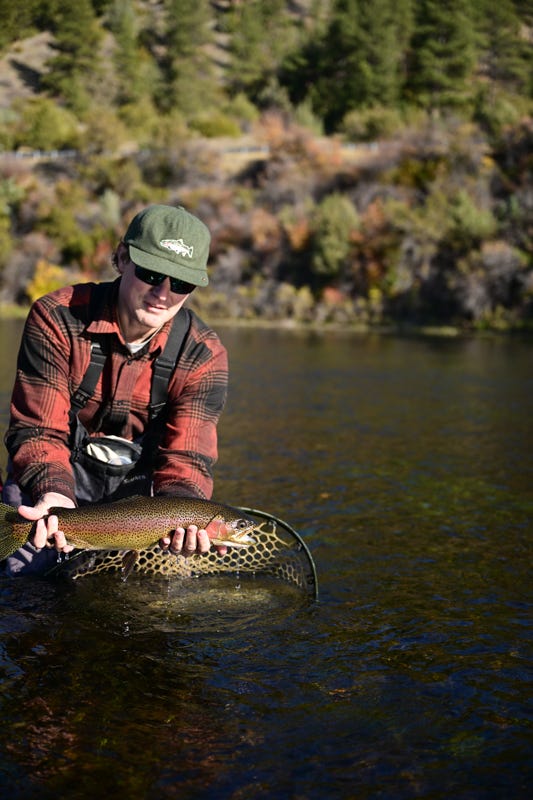
One thing I can say for sure is this: I saw more big brown trout in the river this year than ever before. I personally saw two browns over 25 inches (measured) and one that I helped net that measured just over 26 inches. We also heard about numerous browns in the 23-24-inch range. Who knows how many of those reports are perfectly accurate but, generally, less than one percent of the Missouri’s browns exceed that 24-inch mark.
Another positive note: fish counts in the Cascade section, between Craig and Great Falls--which is in the lower reaches of our classic trout fishing section--have shown much more consistency, with the average size of its trout increasing steadily.
Lastly, even with lower snowpacks and lower flows the Missouri is engineered to have healthy water temperatures. The Missouri’s water flows from the colder water reservoirs, and it’s very rare for water temperatures to reach “Hoot Owl” levels, a name given to fishing restrictions when water temperatures hit 73 degrees or higher for three consecutive days. While nearly all rivers in Montana were on hoot owl restrictions last year, the Missouri really didn’t even come close to those elevated temperatures, which are unhealthy, if not lethal for trout. That means you can enjoy healthy trout, and a reliable fishery, when you travel to Montana.
What about the Missouri’s northern pike?
In 2023 there was a spike in the Missouri’s northern pike population, and in 2024, specifically, anglers started catching them more frequently from Cascade downstream to Great Falls. Geik reiterated that pike are an invasive species and have lived in the lower Gallatin River (one of three rivers that form the Missouri) for many years, slowly working through the system of reservoirs. Likely, those elevated flows in 2018 flushed pike farther downstream into the Holter Dam to Cascade section. Because pike are such an opportunistic fish, they have plenty of food to eat, including endless numbers of baby carp. Geik even showed us a rattlesnake that was recovered from the gut of a northern pike.
Of course, concerned anglers at State Of The Rivers wanted to know, are pike eating all of the trout?
Geik said, “Pike populations are heavily concentrated from below Cascade to Great Falls, and very few pike have been found in the trout sections during routine fish counts.” In fact, fisheries manager Mullen said FWP handles about 5,000 trout during annual sampling and only sees one to two pike a year in the faster, upper reaches of the river. Still, Geik and Mullen said pike are opportunistic and any backwater area from the dam to Great Falls could be a likely home to those northerns.
The takeaway? It sounds like, for the most part, trout in the classic dry-fly waters are relatively safe. However, guide Ria French pried a little bit more at the meeting and said she’s concerned about the number of pike she’s seen and heard of in those sections, basically from the dam downstream to Cascade. Another attendee asked Geik, “What is FWP doing about it?” Geik responded: “We are working on it.”
Looking at the bright side, the Missouri near Great Falls has not provided great fishing until now, with pike providing a new and fun option. Some of those fish, it should be known, grow to large sizes and they eat flies very well. Are pike good for the Missouri? Maybe not. In the meantime, I’ll be out there hunting them down and making some fish tacos afterwards.
What about Whitefish? Don’t they matter?
Yes . . . they do matter.
In fact, Geik said the department has re-instituted counts on native whitefish populations. While data is limited, it’s safe to say there’s a stable population of “locals” and if you, like me, enjoy those fish, you can have blast targeting them. Want whitefish? Tie on a bright beadhead nymph and hold on.
The Wrap Up
A huge thanks goes to the Missouri River Fly Fishers for planning and hosting the State Of The Rivers event. Thanks also to the Do Bar for providing the venue, Trout Montana in Cascade for providing some great raffle prizes, and of course to Montana Department FWP for sharing their data and thoughts and providing an excellent overview of central Montana’s great fisheries.